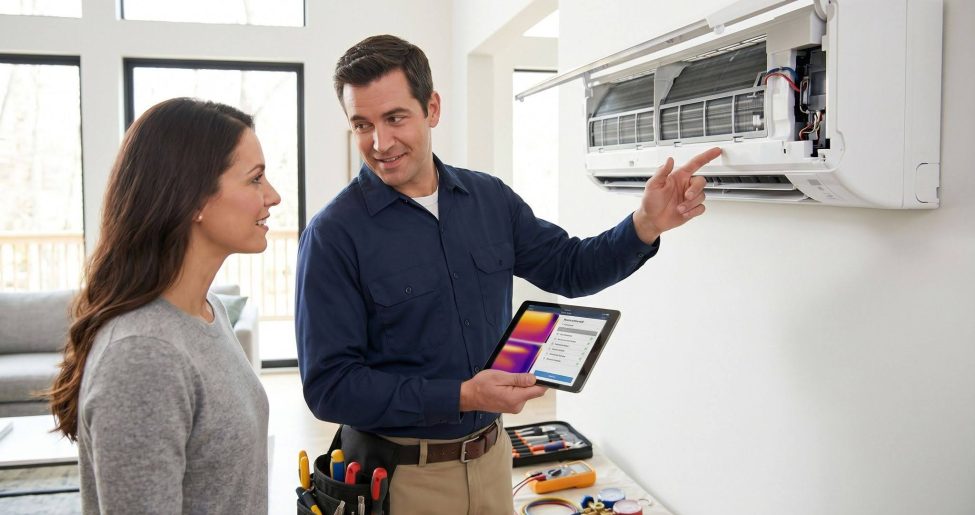
Building customer trust during an HVAC estimate is one of the most effective ways to increase sales and earn long-term loyalty. Homeowners are more likely to choose an HVAC company that communicates clearly, explains repair or replacement options honestly, provides transparent pricing, and demonstrates professionalism from the first interaction. By combining technical expertise with exceptional customer service, HVAC contractors can improve close rates, generate referrals, and build lasting relationships with homeowners.
A technician can have all the technical expertise in the world, but if HVAC clients doesn’t trust them, it’s unlikely they’ll win the job. That’s because an in-home HVAC estimate carries more weight than it appears.
It’s more than evaluating equipment or preparing a proposal, it’s one of the most important customer interactions your company will have, since the prospective customer is checking to see if you’re a good fit. Every conversation, recommendation, and explanation shapes whether the homeowner feels confident moving forward, or continues shopping around.
The good news? Building trust isn’t complicated. It comes down to professionalism, communication, and treating every homeowner with respect. Companies that consistently do these things often see higher close rates, fewer objections, and more long-term customers.
First Impressions Matter
Trust starts before the HVAC diagnostic even begins. When technicians arrive on time, wear clean uniforms, park thoughtfully, and introduce themselves professionally, homeowners immediately feel more comfortable inviting them into their homes.
Small details make a big difference:
- Wear company-branded apparel.
- Use shoe covers when entering.
- Keep tools organized.
- Maintain a clean, professional vehicle.
- Greet everyone politely and explain what will happen during the visit.
These actions signal that your company pays attention to details, and homeowners naturally assume you’ll apply that same care to their HVAC system.
Listen Before You Diagnose
As is the case with all professions, one of the quickest ways to lose trust is jumping straight into a solution before understanding the problem. Instead, ask thoughtful questions.
How long has the issue been happening? Have certain rooms always been uncomfortable? Have utility bills increased? Is the system making unusual noises?
Allow homeowners to explain the situation without interruption. They’ll often provide valuable clues that help with the HVAC diagnostic while also feeling heard and respected. Listening first also demonstrates you’re interested in solving their problem and not simply selling equipment.
Make the HVAC Diagnostic Easy to Understand
Most homeowners don’t speak HVAC. After completing your inspection, explain your findings in plain language instead of relying on technical jargon. Showing homeowners photos of worn components, airflow issues, or damaged equipment can also make recommendations more tangible.
Instead of saying “Your evaporator coil is experiencing restricted airflow due to excessive static pressure,” try saying “The airflow moving through your system is being restricted, which is making your equipment work harder than it should. Over time, that increases wear and can raise your energy bills.”
Simple explanations build confidence because customers understand both the issue and the proposed solution.
Present Options, Not Pressure
Nobody enjoys feeling like they’re being sold. The most trusted HVAC professionals act as consultants rather than salespeople. After completing the HVAC estimate, present several reasonable options when appropriate. Explain the benefits, costs, expected lifespan, efficiency improvements, and any tradeoffs. Do so without pushing the homeowner toward the most expensive solution.
For example, you might outline a graduated strategy:
- A repair that safely extends the system’s life.
- A mid-range replacement with improved efficiency.
- A premium system offering greater comfort and long-term energy savings.
When homeowners feel they’re making an informed decision and not being pressured, they’re much more likely to move forward.
Be Transparent About Pricing
Unexpected surprises rarely build trust. Therefore, an effective HVAC estimate clearly explains:
- Equipment costs
- Labor
- Additional materials
- Timeline
- Warranty coverage
- Any factors that could affect pricing or timing
Transparency also means acknowledging when additional issues may arise after work begins. Even though it may seem early to broach the topic, being honest upfront is far better than surprising customers later. Customers don’t always choose the lowest price, but they usually appreciate and value honesty.
Focus on Long-Term Relationships
This is perhaps the most important consideration. An estimate should be seen as the beginning of an ongoing relationship. Even if a customer isn’t ready to replace their system today, they may still benefit from maintenance or repair services.
Introducing an HVAC service agreement can provide homeowners with scheduled maintenance, priority scheduling, and peace of mind while keeping your company top-of-mind for future work.
Customers who trust their contractor are also more likely to:
- Renew maintenance agreements
- Purchase future system upgrades
- Recommend your company to friends and neighbors
- Leave positive online reviews
Long-term relationships are almost always more valuable than one-time transactions. Not only are they more cost-effective to maintain (when compared to finding new customers), but the benefits extend through word-of-mouth referrals and other future business.
Trust Starts With the Right Team
Of course, none of these best practices happen without skilled, customer-focused employees. That’s why hiring HVAC techs involves much more than evaluating technical ability. It’s just as critical to ascertain communication skills, professionalism, empathy, and problem-solving as it is to gauge mechanical knowledge.
Likewise, HVAC installer hiring should prioritize technicians who understand that every interaction reflects on the company’s reputation (and not just the quality of the installation).
Technical skills can often be strengthened through ongoing education and manufacturer training, and customer service habits should be reinforced as part of every technician’s development.
Related: TIme to Tap Talent: How to Recruit New HVAC Technicians
Training Builds Confidence Inside and Outside the Home
Technicians who receive regular training typically perform differently. They diagnose issues more confidently, communicate recommendations more clearly, and answer customer questions with greater authority. That confidence naturally translates into trust.
Companies that invest in technical education, manufacturer training, and customer communication skills often experience better close rates, fewer callbacks, and stronger customer loyalty.
Related: Why Professional Development is Important for HVAC Technicians
Trust Is Your Competitive Advantage
Homeowners have more choices than ever when selecting an HVAC contractor. Equipment brands may be similar, and pricing often overlaps. What truly differentiates one company from another is the experience customers have during every interaction.
By acting professionally, listening carefully, communicating clearly, and providing transparent recommendations, your team can turn every HVAC estimate into an opportunity to build lasting relationships.
At Aireco, we believe great service starts with great training. Contact us today for the latest training schedules to help your team build trustworthiness and keep them ahead of the competition. Through industry-leading equipment, technical education, and ongoing support, we help HVAC professionals build the knowledge and confidence that earns customer trust and keeps businesses growing for years to come.